by Peter | Jan 3, 2023 | DLC News, Homepage
[column width=”1/1″ last=”true” title=”” title_type=”single” animation=”none” implicit=”true”]
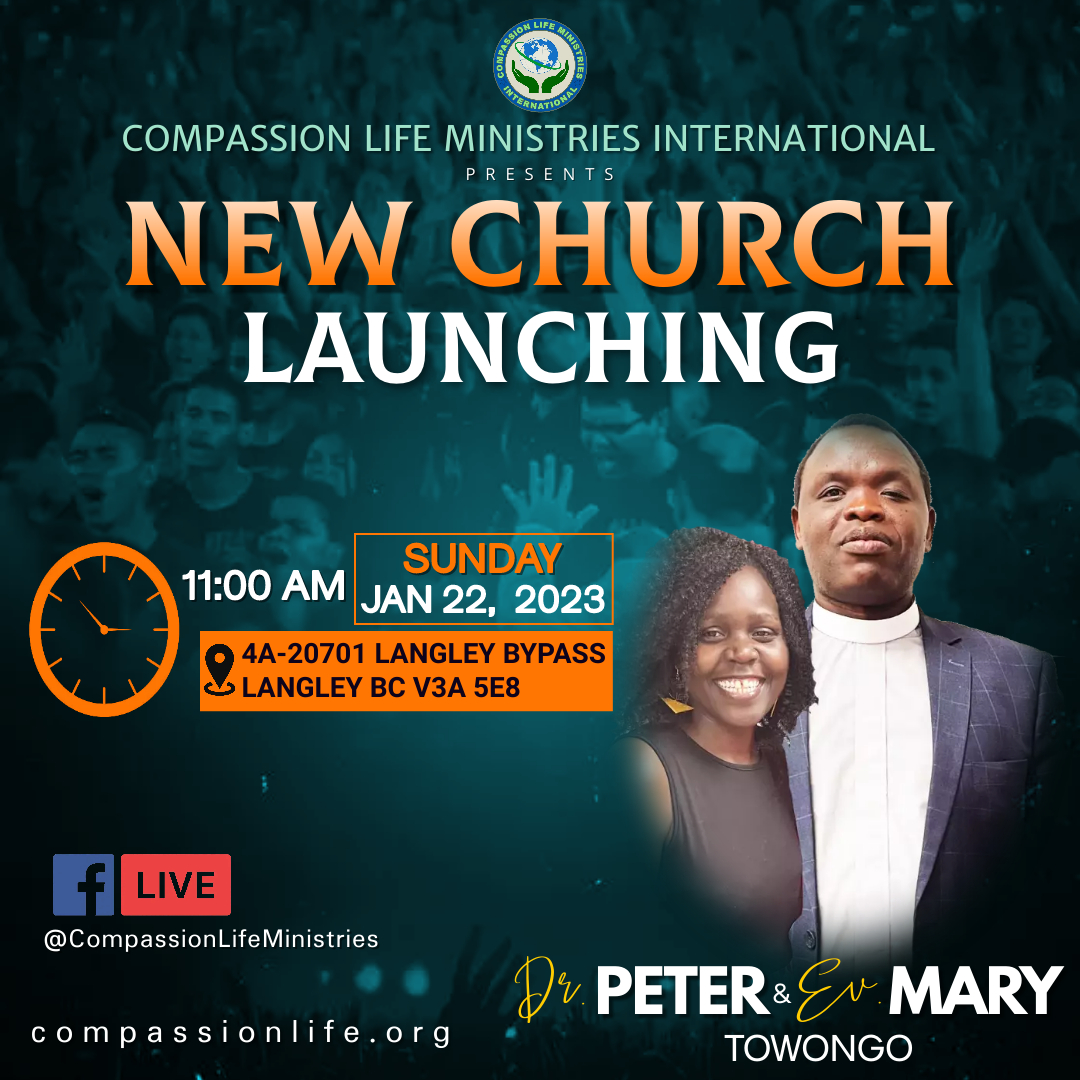
 I HEREBY ANNOUNCE THE LAUNCHING OF DESTINY LIFE CHURCH ON THE SUNDAY OF THE MONTH OF JANUARY 22, 2023. EVERYONE IS WELCOME TO JOIN OUR WONDERFUL SERVICE.
[/column]
by Peter | Jan 1, 2023 | Articles
[column width=”1/1″ last=”true” title=”” title_type=”single” animation=”none” implicit=”true”]
The essence of growing congregations revolves around effective leadership. As the world is becoming more globalized and rapidly advancing in science and technology, ministers must be agile and refine their leadership competencies to meet the current trends. Rick Warren remarks that everything “rises or falls on leadership.”1 In other ways, everything rises because there is effective leadership; everything falls because there is ineffective leadership. The Apostles were successful in pioneering the founding of the church and galvanizing multitudes to heed the Gospel truth; it was because they lived out the leadership prowess that Jesus instilled in them. Today’s ministers are not exempt. They need to effectively discharge their duties in order to grow their congregations both in quantity and quality.
Scholars, however, have admitted that leadership is complex to elaborate on. It encompasses a broad scope of influencing factors, styles, traits, and experiences. Richard Bolden et al. explain that “leadership remains a hotly debated and contested concept. It is a word that is used in many different ways and senses.”2
[/column]
[column parallax_bg=”disabled” parallax_bg_inertia=”-0.2″ extended=”false” extended_padding=”true” background_color=”#e5e1e1″ background_image=”” background_repeat=”” background_position=”” background_size=”auto” background_attachment=”” hide_bg_lowres=”” background_video=”” vertical_padding_top=”0″ vertical_padding_bottom=”0″ more_link=”” more_text=”” left_border=”transparent” class=”” id=”” title=”” title_type=”single” animation=”none” width=”1/1″ last=”true”]
[column_1 width=”1/1″ last=”true” title=”” title_type=”single” animation=”none” implicit=”true”]
- Rick Warren, The Purpose Driven Church: Growth Without Compromising Your Message and Mission (Grand Rapids, MI: ZondervanPublishingHouse, 1995), 384.
- Richard Bolden et , Exploring Leadership: Individual, Organizational, and Societal Perspectives (OUP Oxford, 2011), 2.
[/column_1]
[/column]
[column width=”1/1″ last=”true” title=”” title_type=”single” animation=”none” implicit=”true”]
For instance, in Jerusalem alone, during Jesus’ time, Dag Heward-Mills identified more than forty names being synonymous with the word “leader” and yet they differed in roles: captains, chiefs, generals, governors, guides, politicians, shepherds, heads, managers, judges, counselors, rulers, priests, Pharisees, Sadducees, and the line continues.3 Gregory B. Baxter divulges that Bennis and Nanus have spent decades surveying several pieces of literature referencing leadership, and bewilderingly they discovered more than 350 unclear and equivocal definitions of leadership.4
As a result of this complexity, many church ministers have opted to employ leadership styles and models that are impeding their congregations from growing. Others overemphasize the “anointing” to the detriment of the leadership aspect, believing the anointing alone will “break the yoke” that is hindering the growth of their church. If a congregational leader does not effectuate his leadership abilities, even if a miracle happens where hundreds of new members join the church, in a matter of time they will leave.
Anointing does not substitute leadership; rather it complements leadership. If it substitutes leadership, Jesus would have not spent time with His disciples. He would have anointed them and then quickly wrapped up His ministry to ascend to heaven.
- Dag Heward-Mills, The Art of Leadership, 3rd (Parchment House, 2014), 11–13.
- Gregory Baxter, “A Leadership Training Manual for the 21st Century Church Leader: Based on the Pattern and Principles Jesus Created to Train the Twelve Apostles” (2011): 7.
He did not do that. He spent three and a half years equipping the disciples with leadership qualities to enable them to pioneer the founding of the church and impact others to carry on the leadership trend. Out of desperation, some church leaders have gone to the extent of utilizing secular leadership models that oppose the style that Jesus preferred in His earthly ministry. Baxter laments the fate of the training of Christian leaders today:
Christian leadership training for pastors, missionaries, and lay leaders is mostly patterned after academic, business, military, and government models. This leads to a pragmatic, secular, and American approach to building Churches and advancing the Kingdom of God. Secular models of leadership training can inform and supplement but never usurp scriptural principles and values. The best Christian leadership training pattern is the one Jesus created to train the twelve Apostles.5
To help resolve the issues relating to leadership discrepancies in many churches, this book will examine a variety of leadership practices that are useful to growing churches in today’s connected world, which has unique privileges and challenges unheard of in the past.
By Rev. Dr. Peter Towongo
[/column]
by Peter | Jan 1, 2023 | Articles
[column width=”1/1″ last=”true” title=”” title_type=”single” animation=”none” implicit=”true”]
I was always my Father’s child
He was there from the beginning
A Father after my heart
He pursues me day and night
He never stops working
In me
I see His glory unfolding
I am the works of His hands
He’s kept me hidden
In the palm of His hands
Tenderly calling me
Daily to Himself
I am loved
More than I can ever imagine
Protected and secure
In His wings
Thank You Father
For having me
For drawing me near
You’ve been my rear guard
All along the paths unseen
You’ve been present
In every step
You have watched over me
By Evangelist Mary Aongo
[/column]